


13 Interesting Facts about Gold
Fact 1: Gold Is Older Than Earth
Gold was not created on Earth. Scientists believe most gold formed billions of years ago during violent cosmic events, such as neutron star collisions, before the solar system even existed. As Earth formed, asteroid impacts delivered much of that gold to the planet. Therefore, every piece of gold you see today has a cosmic origin.
Fact 2: Gold Can Last Forever
Many metals slowly rust or corrode when exposed to air and moisture. However, gold is different. It resists corrosion so well. Unlike iron, which rusts over time, gold can remain shiny for thousands of years. That’s why archaeologists still uncover ancient gold jewelry that looks remarkably well preserved. This durability is one reason gold has symbolized permanence and wealth throughout history.
Fact 3: Pure Gold Is Surprisingly Soft
People often associate gold with strength, but pure gold is actually very soft. A ring made from 24-karat gold can scratch or bend more easily than many people expect. That is why jewelers usually mix gold with other metals to create stronger alloys like 18-karat or 14-karat gold for everyday wear.
Fact 4: Gold Can Be Stretched to Incredible Lengths
Gold is one of the most workable metals known. A small amount can be drawn into an extremely thin wire or hammered into sheets so thin that light can pass through them. This remarkable property makes gold valuable not only for jewelry but also for advanced manufacturing.
Fact 4: Many Electornics Contain Gold
Gold is not only reserved for luxury items. In fact, tiny amounts are used inside smartphones, computers, medical equipment, and satellites because gold conducts electricity efficiently and resists corrosion. Although each device contains only a small amount, millions of electronics together consume significant quantities of gold every year.
Fact 5: Gold Is Much Rarer Than Most People Think
Gold may seem common because we see it in jewelry stores around the world. In reality, the total amount of gold ever mined is surprisingly small compared with many other metals. If all of it were gathered in one place, it would form a cube measuring only about 22 to 23 meters on each side—roughly the height of a seven-story building.
Fact 6: Governments Still Trust Gold
Even in today’s digital economy, many countries continue to store large reserves of gold. Central banks hold gold because it can help preserve confidence during periods of financial uncertainty, high inflation, or economic instability. Gold remains an important part of the global financial system.
Fact 7: Gold Is Safe Enough to Eat
Pure gold is non-toxic. Ultra-thin sheets of edible gold are sometimes used to decorate luxury desserts, chocolates, and beverages. Although it doesn’t add flavor or nutrition, it certainly adds a touch of extravagance.
Fact 8 : Gold Has Influenced Human History
For thousands of years, gold has inspired exploration, trade, and even conflict. It has served as currency, a symbol of royal power, and a measure of wealth across civilizations. Few materials have played such a lasting role in shaping economies and cultures.
Fact 9: People Still See Gold as a Safe Haven
Whenever global markets become uncertain, many investors turn to gold. Although no investment is without risk, gold has long been viewed as a way to help preserve wealth during times of economic stress. Its reputation has endured through countless financial crises.
Fact 10: Gold can be Drawn into a Super Long Wire
A single ounce (about 31.1 grams) of gold can be drawn into a wire more than 80 kilometers (50 miles) long without breaking.
Fact 11: Gold is so Dense
Gold is so dense that a cube just 10 cm (about 4 inches) on a side weighs roughly 19 kilograms (42 pounds).
Fact 12: Plants can Absorb Trace amounts of Gold from the Soil
Some plants can absorb trace amounts of gold from the soil, a phenomenon that geologists sometimes use in mineral exploration. One of the best-known examples is the eucalyptus tree, whose roots can take up trace amounts of gold from deep underground and transport tiny particles into the leaves. The discovery that eucalyptus trees can contain trace amounts of gold in their leaves is generally credited to a research team led by geochemist Melvyn Lintern and colleagues at Australia’s national science agency, CSIRO, whose findings were published in 2013.
Fact 13: The largest Gold Nugget is “Welcome Stranger”
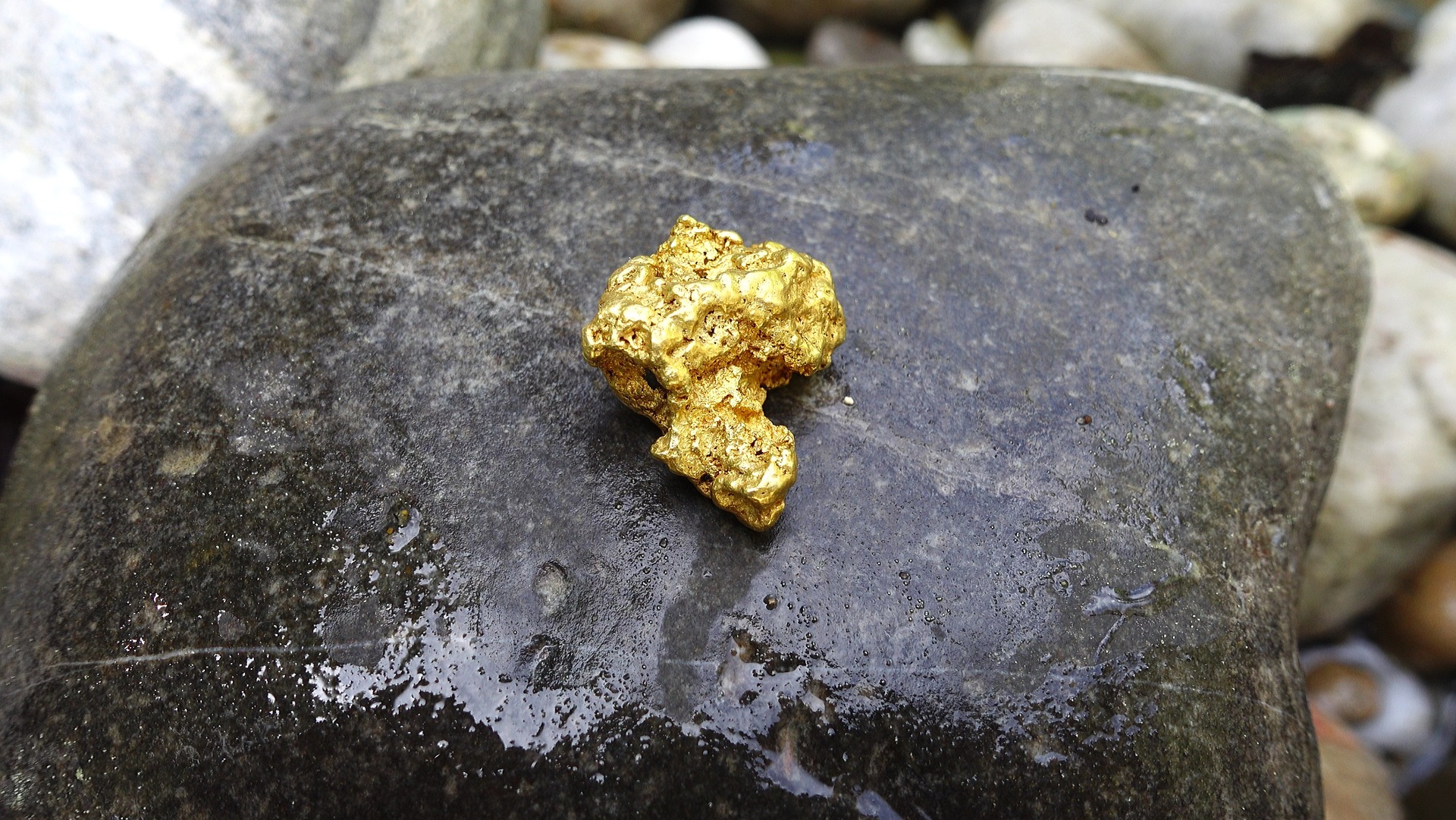
The largest gold nugget ever found and reliably documented is the “Welcome Stranger,” discovered in Australia in 1869, weighing about 72 kilograms (159 pounds) before processing.
Read more


